Bab al-Mandab Strait: The Global Energy Artery and Intercontinental Trade Gateway
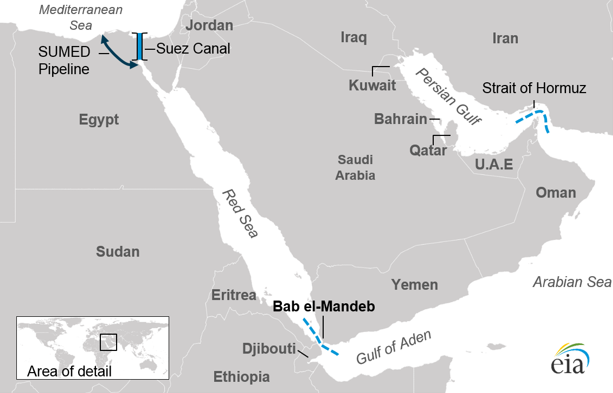
Explore the strategic importance of the Bab al-Mandab Strait, its role in global oil trade, security challenges in Yemen, and international military bases in Djibouti.
The Bab al-Mandab Strait stands as one of the most strategic maritime chokepoints in the world, serving as a vital link between the Red Sea and the Gulf of Aden, which opens into the Indian Ocean. Geographically situated between the Arabian Peninsula (Yemen) and the Horn of Africa (Djibouti and Eritrea), this narrow passage is the southern gateway to the Suez Canal. Its name, which translates to 'Gate of Tears' in Arabic, evokes ancient legends of navigation hazards or the seismic events that separated the two continents millions of years ago. In the 21st century, the strait has evolved into a cornerstone of global energy security and international trade infrastructure.
### Geographical Configuration and Navigation
At its narrowest point, the Bab al-Mandab is approximately 20 miles (32 kilometers) wide. The passage is bifurcated by Perim Island (Jazirat Mayyun), which belongs to Yemen. This creates two distinct channels: the eastern 'Bab Iskender' is about 2 miles wide and 30 meters deep, mostly used by smaller vessels; the western 'Dact-el-Mayun' is the primary artery for international shipping, spanning 16 miles in width and reaching depths of over 300 meters. This deep-water channel allows for the passage of Ultra Large Crude Carriers (ULCCs) and massive container ships, making it indispensable for the global shipping industry.
### Economic Significance: Oil and Global Supply Chains
The economic weight of the Bab al-Mandab is immense. According to the U.S. Energy Information Administration (EIA), more than 6.2 million barrels of crude oil, condensate, and refined petroleum products flow through the strait daily toward Europe, the United States, and Asia. It is also a critical corridor for Liquefied Natural Gas (LNG) exports from Qatar and the UAE. Beyond energy, the strait is a vital artery for the transport of non-oil goods. Thousands of container ships pass through annually, carrying consumer electronics, machinery, and raw materials. Any disruption here creates a ripple effect across global markets, leading to inventory shortages and increased inflation worldwide.
### Geopolitical Tensions and Security Dynamics
The strategic importance of Bab al-Mandab has made it a flashpoint for geopolitical competition. The ongoing conflict in Yemen has directly impacted maritime security, with Houthi forces frequently targeting commercial vessels with anti-ship missiles, drones, and water-borne improvised explosive devices (WBIEDs). These attacks are not merely regional skirmishes; they represent a significant threat to the freedom of navigation. In response, international naval coalitions, such as the Combined Maritime Forces (CMF) and Operation Prosperity Guardian, have increased their presence to deter attacks and ensure the safe passage of merchant ships.
### The Hub of International Military Bases
Djibouti’s unique location on the western shore of the strait has led it to host an unprecedented number of foreign military bases. This small nation is home to permanent military facilities for the United States (Camp Lemonnier), China, France, Japan, and Italy. This concentration of military power highlights the global consensus on the need to protect this chokepoint. While these bases provide a security umbrella against piracy and terrorism, they also reflect the shifting balance of power in the Indo-Pacific and the Middle East, as major world powers vie for influence over this critical maritime corridor.
### Environmental Challenges and Marine Biodiversity
While the focus is often on trade and security, the Bab al-Mandab is also a region of ecological significance. The strait acts as a biological bridge, facilitating the migration of marine species between the Red Sea and the Indian Ocean. The Red Sea is home to some of the world's most resilient coral reefs, which are vital for global climate research. However, the high volume of maritime traffic brings risks of oil spills, plastic pollution, and acoustic disturbance to marine life. International environmental standards and regional cooperation are essential to preserve this unique ecosystem from the industrial pressures of global shipping.
### Future Outlook: Infrastructure and Stability
The future of the Bab al-Mandab is inextricably linked to the political stability of its bordering nations. Long-term security cannot be achieved through military presence alone; it requires economic development and political resolution in Yemen and the Horn of Africa. There are ongoing discussions about transforming the region into a logistics hub, with potential projects like the 'Bridge of the Horns' aimed at connecting Yemen and Djibouti. As the world transitions toward cleaner energy, the nature of the cargo passing through the strait may change, but its status as a critical node in the global connectivity map will remain unchanged for the foreseeable future.
### Geographical Configuration and Navigation
At its narrowest point, the Bab al-Mandab is approximately 20 miles (32 kilometers) wide. The passage is bifurcated by Perim Island (Jazirat Mayyun), which belongs to Yemen. This creates two distinct channels: the eastern 'Bab Iskender' is about 2 miles wide and 30 meters deep, mostly used by smaller vessels; the western 'Dact-el-Mayun' is the primary artery for international shipping, spanning 16 miles in width and reaching depths of over 300 meters. This deep-water channel allows for the passage of Ultra Large Crude Carriers (ULCCs) and massive container ships, making it indispensable for the global shipping industry.
### Economic Significance: Oil and Global Supply Chains
The economic weight of the Bab al-Mandab is immense. According to the U.S. Energy Information Administration (EIA), more than 6.2 million barrels of crude oil, condensate, and refined petroleum products flow through the strait daily toward Europe, the United States, and Asia. It is also a critical corridor for Liquefied Natural Gas (LNG) exports from Qatar and the UAE. Beyond energy, the strait is a vital artery for the transport of non-oil goods. Thousands of container ships pass through annually, carrying consumer electronics, machinery, and raw materials. Any disruption here creates a ripple effect across global markets, leading to inventory shortages and increased inflation worldwide.
### Geopolitical Tensions and Security Dynamics
The strategic importance of Bab al-Mandab has made it a flashpoint for geopolitical competition. The ongoing conflict in Yemen has directly impacted maritime security, with Houthi forces frequently targeting commercial vessels with anti-ship missiles, drones, and water-borne improvised explosive devices (WBIEDs). These attacks are not merely regional skirmishes; they represent a significant threat to the freedom of navigation. In response, international naval coalitions, such as the Combined Maritime Forces (CMF) and Operation Prosperity Guardian, have increased their presence to deter attacks and ensure the safe passage of merchant ships.
### The Hub of International Military Bases
Djibouti’s unique location on the western shore of the strait has led it to host an unprecedented number of foreign military bases. This small nation is home to permanent military facilities for the United States (Camp Lemonnier), China, France, Japan, and Italy. This concentration of military power highlights the global consensus on the need to protect this chokepoint. While these bases provide a security umbrella against piracy and terrorism, they also reflect the shifting balance of power in the Indo-Pacific and the Middle East, as major world powers vie for influence over this critical maritime corridor.
### Environmental Challenges and Marine Biodiversity
While the focus is often on trade and security, the Bab al-Mandab is also a region of ecological significance. The strait acts as a biological bridge, facilitating the migration of marine species between the Red Sea and the Indian Ocean. The Red Sea is home to some of the world's most resilient coral reefs, which are vital for global climate research. However, the high volume of maritime traffic brings risks of oil spills, plastic pollution, and acoustic disturbance to marine life. International environmental standards and regional cooperation are essential to preserve this unique ecosystem from the industrial pressures of global shipping.
### Future Outlook: Infrastructure and Stability
The future of the Bab al-Mandab is inextricably linked to the political stability of its bordering nations. Long-term security cannot be achieved through military presence alone; it requires economic development and political resolution in Yemen and the Horn of Africa. There are ongoing discussions about transforming the region into a logistics hub, with potential projects like the 'Bridge of the Horns' aimed at connecting Yemen and Djibouti. As the world transitions toward cleaner energy, the nature of the cargo passing through the strait may change, but its status as a critical node in the global connectivity map will remain unchanged for the foreseeable future.