The Bab el-Mandeb Strait: A Global Trade Artery and Geopolitical Epicenter
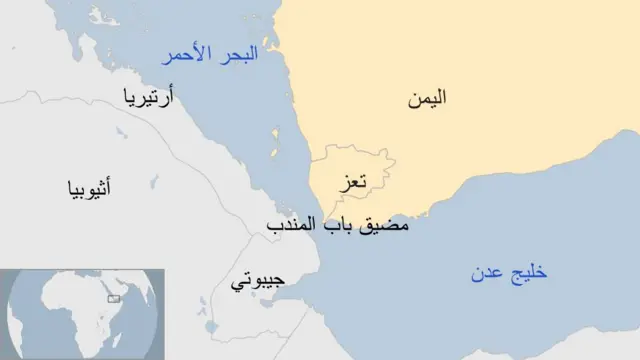
Explore the strategic importance of the Bab el-Mandeb Strait, its role in global oil trade, its geography between Yemen and Djibouti, and the security challenges threatening international shipping.
The Bab el-Mandeb Strait stands as one of the world's most vital maritime chokepoints, serving as the strategic link between the Red Sea and the Gulf of Aden, which opens into the Indian Ocean. Geographically situated between the continents of Asia and Africa, it is bordered by Yemen on the Arabian Peninsula and Djibouti and Eritrea in the Horn of Africa. The name 'Bab el-Mandeb' translates to the 'Gate of Tears' in Arabic, a title rooted either in the treacherous navigation caused by strong currents and hidden reefs that claimed many ancient vessels, or in legends of massive human migrations and historical tragedies. The strait's primary significance lies in its role as the southern gateway to the Suez Canal; without it, the canal would lose its connectivity to the global East, effectively halting the shortest maritime route between Europe and Asia. Spanning approximately 30 kilometers (18 miles) at its narrowest point, the strait is divided into two channels by the Yemeni island of Perim (Mayun). The eastern channel, known as Bab Iskender, is roughly 3 kilometers wide and 30 meters deep, while the western channel, Dact-el-Mayun, is significantly wider at 25 kilometers and reaches depths of 310 meters, making it the primary lane for large cargo ships and ultra-large crude carriers (ULCCs). From an economic perspective, Bab el-Mandeb facilitates the passage of approximately 10% to 12% of total global maritime trade. It is a critical artery for energy security, with over 6 million barrels of crude oil and refined petroleum products flowing through it daily toward Europe, North America, and Asia. Any disruption or closure of this waterway triggers immediate volatility in global energy markets and a spike in maritime insurance premiums and shipping costs. Geopolitically, the strait has become a theater for international competition. Major global powers, including the United States, China, France, and Japan, maintain military bases in nearby Djibouti to safeguard their commercial interests and ensure freedom of navigation. Regional instability, particularly the protracted conflict in Yemen, has heightened security concerns, evolving from traditional piracy threats to modern risks involving missile attacks and drone strikes. This has necessitated the formation of international naval coalitions, such as Combined Task Force 153, to provide a security umbrella for merchant vessels. Historically, Bab el-Mandeb was a prize for colonial empires; Britain occupied Perim Island in 1857 to secure the route to India even before the Suez Canal's completion. Beyond economics and war, the strait is an ecological treasure, hosting unique marine biodiversity and coral reefs that are resilient to rising sea temperatures, making them a subject of intense scientific study. The future of Bab el-Mandeb remains intrinsically tied to the political stability of its littoral states and the ability of the international community to keep this vital passage neutral and secure amidst shifting global power dynamics.