Logistics Challenges Amidst Gulf Crises and Maritime Tensions: A Comprehensive Analysis
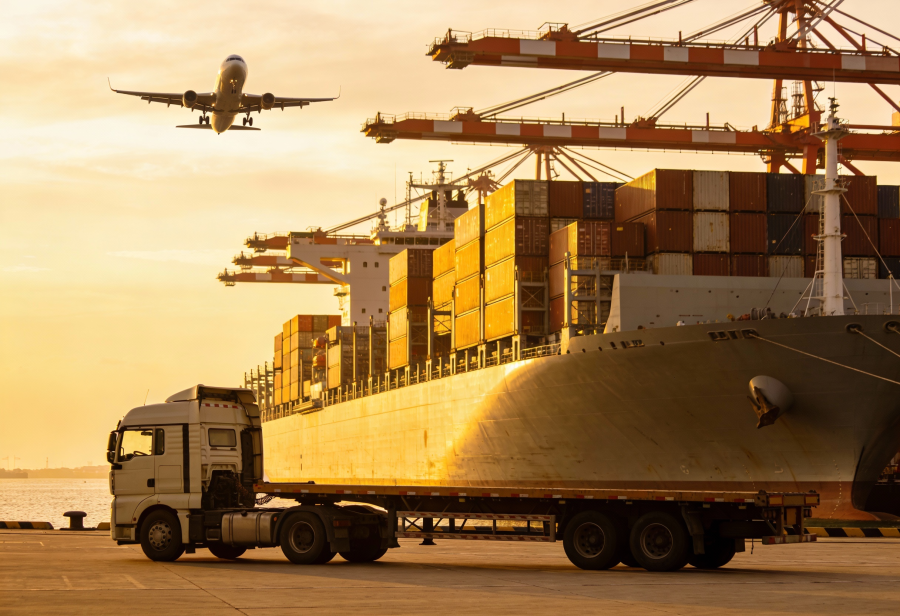
Deep analysis of Gulf logistics challenges during maritime crises. Discover the impact of route disruptions, rising costs, land-bridge solutions, and digital transformation.
<h2>Introduction: The Complex Logistics Landscape in the Gulf</h2>
The Arabian Gulf region serves as the strategic nexus of global trade, linking East and West through critical maritime arteries like the Strait of Hormuz, Bab al-Mandab, and the Suez Canal. However, recent geopolitical escalations, particularly the tensions in the Red Sea, have catalyzed unprecedented challenges for the logistics sector. This is no longer a temporary disruption but a fundamental restructuring of global supply chains. Companies are forced to navigate a volatile environment where traditional routes are compromised, necessitating a radical rethink of transport security, cost management, and lead-time predictability.
<h2>1. Route Disruptions and the Shift to the Cape of Good Hope</h2>
The instability in the Red Sea has prompted global shipping giants to suspend operations through the Suez Canal, a conduit for approximately 12% of world trade. The alternative—rerouting around Africa via the Cape of Good Hope—adds 3,500 to 4,000 nautical miles and 10 to 14 days to the voyage for vessels traveling between Asia and Europe or the Gulf. For GCC nations, this delay triggers a domino effect: raw materials for industries are delayed, and consumer goods face stockouts. This shift has decimated the efficiency of 'Just-in-Time' inventory models, forcing regional businesses to carry larger, more expensive safety stocks.
<h2>2. Surging Freight Rates and War Risk Surcharges</h2>
Economic consequences are the most immediate byproduct of logistics crises. Extended voyages mean significantly higher fuel consumption, leading carriers to implement various surcharges, including 'Emergency Contingency Surcharges' and 'War Risk Premiums.' Freight rates from Asian manufacturing hubs to Gulf ports like Jebel Ali or Dammam have seen spikes of up to 200% compared to pre-crisis levels. Insurance costs have also skyrocketed, as underwriters re-evaluate the risk of transiting regional waters. These costs are inevitably passed down the value chain, contributing to inflationary pressures across the Middle East.
<h2>3. Emergence of Multi-modal Alternatives: The Land Bridge Solution</h2>
In response to maritime bottlenecks, Gulf nations have accelerated the development of multi-modal corridors. A prominent solution is the 'Land Bridge' concept, which utilizes the highly developed road and rail networks of Saudi Arabia and the UAE. Cargo is discharged at ports in the Arabian Gulf (e.g., Jebel Ali or Khalifa Port) and trucked across the peninsula to Red Sea ports (e.g., Jeddah Islamic Port) or directly to Mediterranean gateways. Furthermore, Sea-to-Air solutions have gained traction, where urgent cargo arrives by ship in Dubai or Muscat and is then flown to Europe, offering a middle ground between slow sea routes and expensive air freight.
<h2>4. Infrastructure Strain: Port Congestion and Warehousing Demand</h2>
Sudden changes in vessel schedules often lead to 'bunching,' where multiple large ships arrive at a port simultaneously, overwhelming berth capacity and terminal operations. Gulf ports have had to adapt rapidly to manage these irregular surges. This has led to a localized boom in the warehousing sector, as businesses seek more space to store goods amidst delivery uncertainty. Cold chain logistics, in particular, have faced pressure to ensure food and pharmaceutical security, requiring governments to invest in expanded strategic reserve facilities to mitigate the impact of prolonged maritime disruptions.
<h2>5. Digital Transformation and AI as Pillars of Resilience</h2>
The crisis has proven that digital maturity is a competitive advantage. Logistics providers in the Gulf are increasingly deploying Artificial Intelligence (AI) for predictive analytics and dynamic rerouting. 'Digital Twin' technology allows port authorities to simulate various crisis scenarios and optimize yard management in real-time. Blockchain is also being leveraged to streamline customs documentation, reducing the reliance on physical paperwork that can be delayed during regional instability. These technologies have become essential for maintaining visibility in a fragmented and unpredictable supply chain environment.
<h2>6. Future Outlook: Building Regional Supply Chain Autonomy</h2>
The primary takeaway from the current Gulf logistics crisis is the necessity of diversification and resilience. Regional powers are now prioritizing 'near-shoring' and localizing manufacturing to reduce dependence on vulnerable long-haul shipping routes. Initiatives like the Saudi National Transport and Logistics Strategy aim to transform the Kingdom into a global hub that connects three continents via integrated land, sea, and air networks. The future of logistics in the Gulf lies in creating a redundant, tech-driven infrastructure that can withstand geopolitical shocks while maintaining the seamless flow of global commerce.
The Arabian Gulf region serves as the strategic nexus of global trade, linking East and West through critical maritime arteries like the Strait of Hormuz, Bab al-Mandab, and the Suez Canal. However, recent geopolitical escalations, particularly the tensions in the Red Sea, have catalyzed unprecedented challenges for the logistics sector. This is no longer a temporary disruption but a fundamental restructuring of global supply chains. Companies are forced to navigate a volatile environment where traditional routes are compromised, necessitating a radical rethink of transport security, cost management, and lead-time predictability.
<h2>1. Route Disruptions and the Shift to the Cape of Good Hope</h2>
The instability in the Red Sea has prompted global shipping giants to suspend operations through the Suez Canal, a conduit for approximately 12% of world trade. The alternative—rerouting around Africa via the Cape of Good Hope—adds 3,500 to 4,000 nautical miles and 10 to 14 days to the voyage for vessels traveling between Asia and Europe or the Gulf. For GCC nations, this delay triggers a domino effect: raw materials for industries are delayed, and consumer goods face stockouts. This shift has decimated the efficiency of 'Just-in-Time' inventory models, forcing regional businesses to carry larger, more expensive safety stocks.
<h2>2. Surging Freight Rates and War Risk Surcharges</h2>
Economic consequences are the most immediate byproduct of logistics crises. Extended voyages mean significantly higher fuel consumption, leading carriers to implement various surcharges, including 'Emergency Contingency Surcharges' and 'War Risk Premiums.' Freight rates from Asian manufacturing hubs to Gulf ports like Jebel Ali or Dammam have seen spikes of up to 200% compared to pre-crisis levels. Insurance costs have also skyrocketed, as underwriters re-evaluate the risk of transiting regional waters. These costs are inevitably passed down the value chain, contributing to inflationary pressures across the Middle East.
<h2>3. Emergence of Multi-modal Alternatives: The Land Bridge Solution</h2>
In response to maritime bottlenecks, Gulf nations have accelerated the development of multi-modal corridors. A prominent solution is the 'Land Bridge' concept, which utilizes the highly developed road and rail networks of Saudi Arabia and the UAE. Cargo is discharged at ports in the Arabian Gulf (e.g., Jebel Ali or Khalifa Port) and trucked across the peninsula to Red Sea ports (e.g., Jeddah Islamic Port) or directly to Mediterranean gateways. Furthermore, Sea-to-Air solutions have gained traction, where urgent cargo arrives by ship in Dubai or Muscat and is then flown to Europe, offering a middle ground between slow sea routes and expensive air freight.
<h2>4. Infrastructure Strain: Port Congestion and Warehousing Demand</h2>
Sudden changes in vessel schedules often lead to 'bunching,' where multiple large ships arrive at a port simultaneously, overwhelming berth capacity and terminal operations. Gulf ports have had to adapt rapidly to manage these irregular surges. This has led to a localized boom in the warehousing sector, as businesses seek more space to store goods amidst delivery uncertainty. Cold chain logistics, in particular, have faced pressure to ensure food and pharmaceutical security, requiring governments to invest in expanded strategic reserve facilities to mitigate the impact of prolonged maritime disruptions.
<h2>5. Digital Transformation and AI as Pillars of Resilience</h2>
The crisis has proven that digital maturity is a competitive advantage. Logistics providers in the Gulf are increasingly deploying Artificial Intelligence (AI) for predictive analytics and dynamic rerouting. 'Digital Twin' technology allows port authorities to simulate various crisis scenarios and optimize yard management in real-time. Blockchain is also being leveraged to streamline customs documentation, reducing the reliance on physical paperwork that can be delayed during regional instability. These technologies have become essential for maintaining visibility in a fragmented and unpredictable supply chain environment.
<h2>6. Future Outlook: Building Regional Supply Chain Autonomy</h2>
The primary takeaway from the current Gulf logistics crisis is the necessity of diversification and resilience. Regional powers are now prioritizing 'near-shoring' and localizing manufacturing to reduce dependence on vulnerable long-haul shipping routes. Initiatives like the Saudi National Transport and Logistics Strategy aim to transform the Kingdom into a global hub that connects three continents via integrated land, sea, and air networks. The future of logistics in the Gulf lies in creating a redundant, tech-driven infrastructure that can withstand geopolitical shocks while maintaining the seamless flow of global commerce.